Protect the investment.
Maximize the outcome.
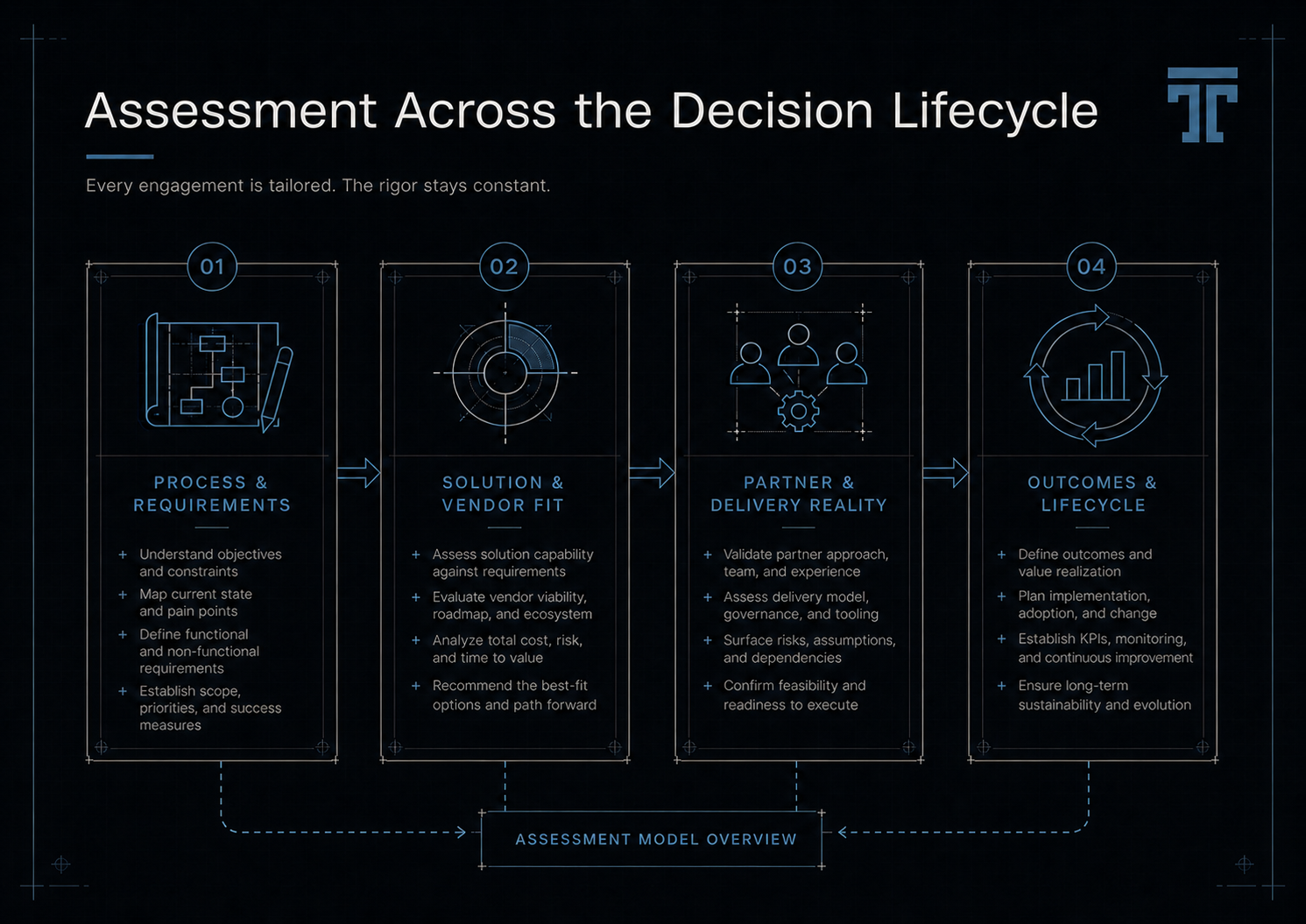
Every engagement is built around a defined assessment approach tailored to the specific situation. The entry point and emphasis differ. The rigour does not.
How the work is assessed.
Every engagement is tailored to the situation. The rigor stays constant, from process and requirements through outcomes and lifecycle durability.
Process Foundation & Vendor Evaluation
When this foundation is missing, every subsequent decision becomes structurally more expensive to get wrong.
Every engagement starts in the same place: building a shared understanding of how processes work today and defining the outcomes the organization is trying to achieve. That means working with the people who do the work, establishing target-state outcomes in specific and measurable terms, and aligning stakeholders before any vendor enters the conversation.
The timelines that drive technology decisions rarely leave room for this foundational work. That is exactly why it needs to happen first.
From there, the advisory continues through vendor evaluation. Whether selecting an enterprise platform, navigating a digital transformation, or evaluating a build versus buy decision, the work is structured to validate the fit between a vendor's narrative and your actual operational needs, not against an unvalidated ideal state.
Agentic AI & Enterprise Solution Assessment
An independent view of what is real, what is relevant, and what the risk looks like.
Agentic AI capabilities and enterprise solutions are now embedded in every vendor renewal, every platform roadmap, and every internal proposal. They are also being proposed internally by teams who see opportunity but may not have the full picture of cost, risk, and organizational readiness. The substance behind any of these proposals, whether they come from a vendor or from within, varies significantly.
The assessment evaluates the specific capabilities being presented or proposed, in the context of your organization. It produces a clear, prioritized view of where these solutions can deliver measurable positive business value, and what the near and long-term cost and risk look like.
It also examines how the proposed solutions are developed, released, supported, and changed over time. Those lifecycle realities matter as much as the capability itself, especially when agentic AI or enterprise solutions become part of core operating processes.
Partner Validation & Implementation Oversight
A system integrator's delivery plan reflects its delivery model, assumptions, and constraints. An independent view helps keep the work aligned with your outcome.
If a system integrator or implementation partner is already engaged, that relationship benefits from independent validation. A delivery plan reflects a set of assumptions about scope, sequencing, staffing, governance, dependencies, and change management. Torsten Advisory provides an independent assessment of how those assumptions align with your organization's outcomes, so the implementation remains grounded in the value the decision was meant to create.
This work continues through implementation and into outcome validation. The focus is on whether the delivery model, governance, staffing, dependencies, and decision controls remain aligned with the outcomes the organization needs.
The advisory work above is the focus of this practice. Two adjacent kinds of engagement are also welcomed where the situation is right.
Lifecycle assessment for private equity and venture capital firms evaluating enterprise software investments, bringing the full operator perspective to deals where standard technical diligence does not reach. And fractional product management partnerships for product teams and founders, working alongside the existing team to align how a product is built, sold, and delivered.
Both are available through direct introduction.